Tag Literature and Philosophy

Reflections and content on the relationship between literature and philosophy, their intersections, dialogues, and historical influence.

Valentinianism and the Internal Crisis of Christianity in the Second Century

When one speaks of the great heresies of the early Christian centuries, one often imagines marginal groups, enclosed in obscure circles and removed from the ordinary life of the communities. The case of Valentinianism breaks this pattern. Between the second and third centuries, the system developed by Valentinus — one of the most sophisticated Gnostic masters — infiltrated the very heart of the Church, attracted cultivated elites, produced literature of the highest calibre, and almost became, in certain places, a viable internal alternative to nascent Christianity.

Les Misérables: a work that exposes Jansenist rigorism

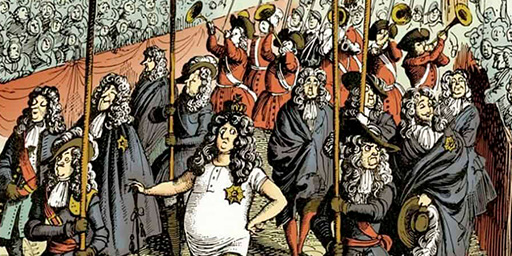
The France in which Victor Hugo writes Les Misérables is a nation still marked by an old spiritual wound: Jansenist rigorism. Although Jansenism had been officially condemned and the celebrated Abbey of Port-Royal destroyed in the seventeenth century by order of Louis XIV, its ideas and its moral atmosphere continued to permeate French culture for a long time.

The Theatre of Salvation and the Tragic Structure of the Rich Young Man between Aristotle, Campbell, and Stanislavski

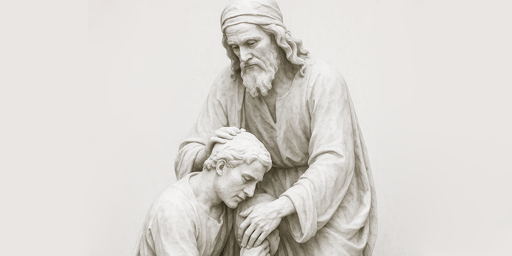
To begin this essay, I needed to draw on a few concepts and authors, attempting to bring this context closer to the human drama. Thus, my aim here is not to produce a theological essay but, as a novelist, to assess the text of the Gospel of Matthew 19 and from there try to approach the drama suffered by the rich young man upon receiving Christ’s words.

Rhetoric, the Sophists, and the Birth of Dialectic

In Ancient Greece, speech was both a tool of power and an instrument for the pursuit of truth. The fifth century BC, known as the “Age of Pericles”, marked the flourishing of Athenian democracy. In this context, the word logos assumed a central role in public life. It was through the force of speech that citizens persuaded, deliberated, defended causes, and rose politically.